
Orientation is the airlock. It exists because the world you are entering is no longer stable enough to navigate with inherited rules, inherited institutions, or inherited assumptions. Many readers arrive here with the same question disguised in different clothes: why does everything feel harder to predict, harder to trust, and harder to plan? This section is designed to answer that without theatre. It gives you the minimum viable map for operating in a volatile environment and tells you exactly which books in this library will help you stabilise your decisions, your risk exposure, and your personal or organisational operating posture.
Volatility is not a mood. It is a structural condition: faster feedback loops, thinner buffers, higher consequence density, and greater correlation between events that used to be separate. In a volatile world, the cost of being wrong rises, the lifespan of plans shortens, and the penalty for relying on social consensus increases. You can still build, but you must build differently: with clearer assumptions, tighter interfaces, more explicit stop-lines, and a stronger relationship to reality than to narrative. Most people try to solve volatility with more information. That fails. The winning move is better architecture: better decision rules, better boundary logic, and better record integrity so you can detect drift before it becomes damage.
Volatility also breaks one of the oldest comfort devices people use to stay sane: cycle thinking. When the world becomes unstable, the instinct is to reach for loops—boom and bust, rise and fall, “this too shall pass,” the promise that the pattern will come back around and make the pain meaningful. But cycles are often a narrative sedative, not an operating model. If you want the deeper correction to the “it will repeat” reflex, read The Wave Beyond the Wheel: The Myth of Cycles. It dismantles the cycle frame and replaces it with wave logic—surge, interference, phase change, and tipping—so you stop waiting for repetition and start designing for transformation. That shift matters because a volatile environment is not a bigger cycle; it is a different regime.
This section contains entry books that work together. Fieldquake is the macro lens: the forces shaking civilisation over the coming decades and how those forces interact. It is written for readers who need the long arc, the large-scale pattern, and the civilisational context that explains why “normal” no longer returns. The Collapse Wave is the near-horizon lens: a structural guide to why function is failing while form persists, how to think in probability bands instead of prophecy, and how to read the difference between managed decline, acute shock, legitimacy rupture, and hard institutional failure without slipping into doom or denial. It is written for readers who feel the pressure tightening now and need a map that is concrete enough to change posture, reserves, and exposure over the next five years. The New Rules of the Game is the operational lens: a practical guide for living and working inside volatility without becoming cynical, performative, or paralysed. It translates instability into usable rules: what to stop doing, what to build instead, and how to protect your bandwidth, commitments, and exposure in a world that punishes naïve continuity. The Wave Beyond the Wheel: The Myth of Cycles is the perceptual lens: it rewires the mental model underneath all of it, removing the hidden expectation of return that causes people to mis-time risk, misread recovery, and keep investing in institutions that are already past their phase.
Use this section in one of three ways. If you feel disoriented, start with The New Rules of the Game and apply the tools immediately; your first goal is not understanding the world, but stabilising your next decisions. If you need a clear map of what is likely over the next five years, start with The Collapse Wave; it will give you probability-based framing and practical distinctions that stop you mistaking continuous degradation for “stability” or a single shock for “the end”. If you need macro clarity for strategy, policy, or institutional work, start with Fieldquake and let it reframe the environment you are actually operating within. If you keep finding yourself waiting for “the cycle” to turn—personally, financially, or politically—read The Wave Beyond the Wheel: The Myth of Cycles early; it will remove the false map that makes volatility feel like a temporary detour rather than the new operating terrain. If you want all four, read The New Rules of the Game first for operational grip, then The Collapse Wave for near-horizon risk realism, then Fieldquake for the deeper civilisational map, then The Wave Beyond the Wheel: The Myth of Cycles to lock in the correct pattern language, and return to the Operator Toolkits once you can name the risks you are facing.
This section is not here to scare you. It is here to remove false comfort. The library does not offer optimism as a product. It offers orientation as infrastructure. Once you can see the terrain clearly, you can choose your posture: refusal where participation would invert you, reset where your signal has degraded, coherence where systems can be redesigned, and long-horizon architecture where civilisation needs new scaffolding. Volatility is not the end of agency. It is the end of lazy agency.
FIELDQUAKE: Hidden Forces That Will Shake Civilisation
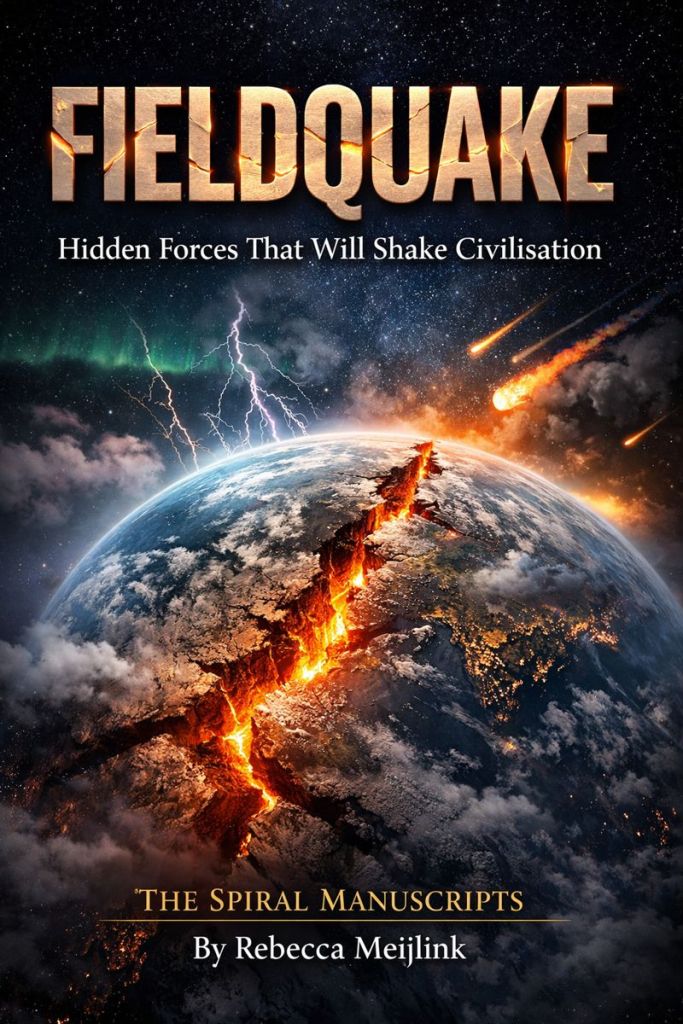
FIELDQUAKE names the forces most people feel but can’t explain: the hidden shifts underneath politics, economics, technology, culture, and the human nervous system. These are not “events”. They are structural changes in the operating field—changes that make institutions wobble, truths fragment, and daily life feel more volatile than it should.
Across 15 Quakes and 9 bonus Quakes, the book maps what is actually destabilising civilisation: why resilience plans keep failing, why trust keeps collapsing, why meaning is being replaced by performance, why supply chains snap in correlated cascades, why time feels compressed, why reality is becoming synthetic, why money is turning into a control system, and why the future is becoming a coherence race.
This is not a doom book. It is a diagnostic. It shows how the mechanics work—how incentives distort behaviour, how feedback loops break, and why the same failures keep repeating in different costumes.
If you want to stay sovereign in a loud world, you need a clearer map than headlines and opinions. This book gives you language, structure, and orientation—so you can stop being surprised and start building coherence where you stand.
Order your copy on Amazon: https://amzn.eu/d/1Xpficc
The New Rules of the Game: A Practical Guide for a Volatile World
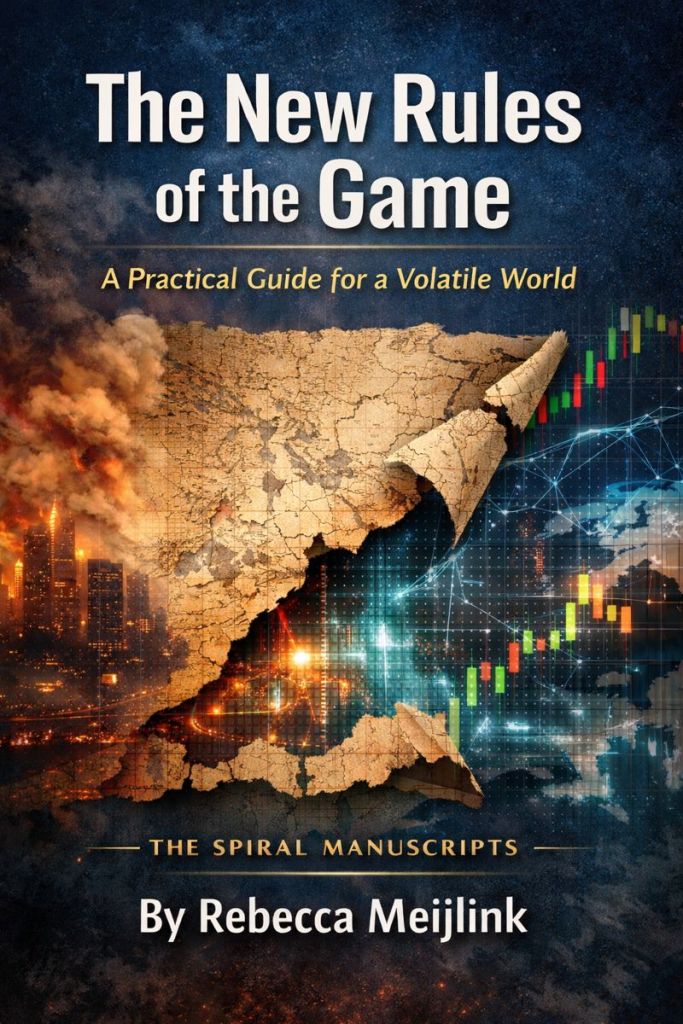
The old rules promised stability. Effort would compound. Institutions would hold. Expertise would protect you. Trust would be reciprocal. Planning would work. They were not lies. They were assumptions—built for a world with slower change, stronger enforcement, and more predictable incentives. That world is gone.
The New Rules of the Game is a structural guide to operating inside volatility without panic, performance, or false optimism. It shows why so many people feel exhausted, blocked, or disoriented—and why the problem is often not personal weakness, but systemic misalignment. You will learn how the game actually works now: how reputation is assembled without your consent, why legibility beats raw performance, how overload is outsourced onto individuals, why fragile morality collapses under pressure, and why careers, relationships, money, and institutions behave differently once stability can no longer be assumed.
This book is for readers who want realism over reassurance—and competence over slogans.
Not certainty. Orientation.
Not ideology. Operating principles.
Not hope as a mood. Coherence as a design choice.
Order your copy on Amazon: https://amzn.eu/d/6iFGpMl
The Collapsing Wave: Why Everything Feels Like It’s Failing
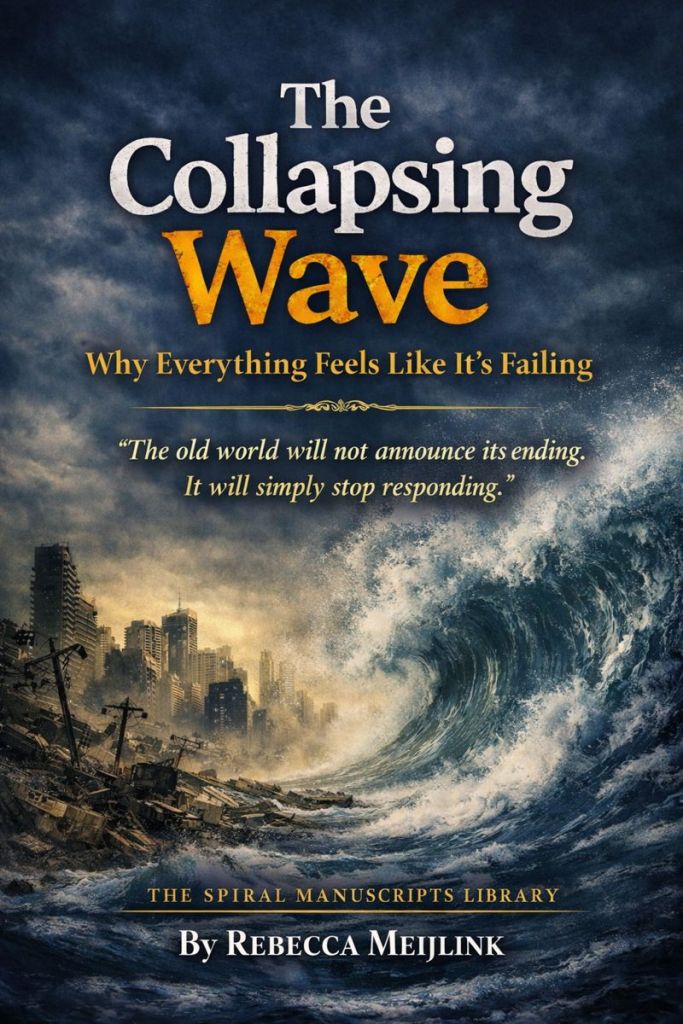
The world has not ended. It has simply become less responsive. The Collapsing Wave is a structural guide to why life now feels harder to predict, harder to trust, and harder to plan—even while the surface rituals of “normal” continue. Markets still trade. Institutions still publish dashboards. Press conferences still happen. Yet outcomes degrade: queues lengthen, costs rise, competence thins, and trust withdraws.
This book explains collapse as a condition, not a spectacle. It shows how form can persist while function fails, why systems survive by patching and narrative management, and why waiting for a single cinematic “moment” is the most reliable way to mis-time risk. Instead of prophecy, it offers mechanisms: buffers, feedback loops, incentive inversion, legitimacy decay, and the quiet migration of function into parallel systems.
Built for sceptical readers, The Collapsing Wave includes a practical diagnostic scorecard, probability bands for the next five years, and a clear distinction between managed decline, acute shock, legitimacy rupture, hard institutional failure, and low-probability state-collapse dynamics. The aim is not fear. It is orientation—so you can make cleaner decisions in a world that no longer rewards naïve continuity.
Order your copy on Amazon: https://amzn.eu/d/exBqMJd
The Wave Beyond the Wheel: The Myth of Cycles

We have been told that life moves in comforting cycles.
Civilisations rise and fall. Markets crash and recover. Souls return. Even grief, we’re told, comes in stages.
The cycle soothes — but it deceives. In this book, the myth of cycles is dismantled and replaced with a sharper lens: waves. Waves do not repeat. They surge. They crash. They interfere. They transform. They don’t return — they break.
Drawing on physics, psychology, biology, finance, and philosophy, she introduces a universal scalar grammar — comprising amplitude, frequency, resonance, and the tipping point — and uses it to expose what cycle thinking hides. You will discover:
- Why business and hype cycles mislead innovators and investors.
- Why no civilisation — from Rome to Silicon Valley — truly “rises again.”
- Why grief, addiction, and change refuse the polite order of psychological stages.
- How even science — from entropy to evolution — rejects eternal return.
- What it means to live when life is no longer a loop — but a wave.
The Wave Beyond the Wheel is not a metaphor. It’s a transmission.
It smashes the oldest intellectual sedative we know — and offers a new way to think, feel, act, and endure.
Order your copy on Amazon: https://amzn.eu/d/6A0cXOs
Important Notice
Before proceeding, visitors are advised to read the full Legal Notice, Disclaimer & Terms of Engagement. Engagement with The Spiral Manuscripts materials requires psychological stability and informed consent. This site contains advanced conceptual and metaphysical material intended for mature readers. You must be 18 years or older to engage with this content. These works are conceptual transmissions, not professional or therapeutic advice. By continuing to browse this site, you acknowledge that you have read and accepted the terms described at: https://spiralmanuscripts.com/legal-notice-disclaimer-terms-of-engagement/
 The Spiral Manuscripts